

Nelson Mandela: Legacy of a Sporting Struggle, Spirit of a Global Call to Action
- Jul 18, 2025
- 3 min read

On the anniversary of UN International Nelson Mandela Day, the Youth Charter pays tribute to one of the most iconic and inspirational figures of our time Nelson Rolihlahla Mandela, affectionately known as Madiba. His life and legacy serve as a profound reminder that peace, justice, and reconciliation are not merely political ideals but lived realities, forged through struggle, resilience, and an unwavering belief in the power of unity.
Madiba and the Origins of Sport for Development and Peace
Long before the United Nations formally recognised Sport for Development and Peace, Nelson Mandela lived it. From the confines of Robben Island, where he and fellow ANC freedom fighters turned sport into a means of resistance, dignity, and solidarity, to the global stages of diplomacy where he championed sport as a tool for transformation - Madiba understood that sport was far more than play. It was a political, social, and cultural force capable of building nations.
It is no coincidence that in 1993, the same year the Youth Charter was launched, Madiba helped lay the foundations for a new South Africa grounded in justice and human rights. In Johannesburg, the Youth Charter's vision was presented alongside a "Vision for Sport" that would inspire national and international movements for youth empowerment and community development.
Moments That Changed the World
From Orlando Stadium to St. Petersburg, from the UK South Africa Sports Initiative to the Commonwealth Youth Games, Madiba’s presence ignited a movement. His symbolic gesture of wearing the Springbok jersey at the 1995 Rugby World Cup final was an act of unity that transcended decades of division. This was more than historic; it was a clarion call for what sport could achieve in the service of peace.
That same spirit was evident in 2010, when South Africa hosted the FIFA World Cup, becoming the first African nation to do so. Behind the scenes and before the cameras, Mandela’s vision helped shift global perceptions of Africa, not as a continent in crisis, but as a home of resilience, hope, and global leadership.
A Vision that Became a Movement
Nelson Mandela once said, “Sport has the power to change the world. It has the power to inspire. It has the power to unite people in a way that little else does.” This belief has echoed through the Youth Charter’s mission, inspiring three decades of work across the UK, South Africa, and internationally.
The Community Campus Model, our practical framework for delivering the UN Sustainable Development Goals through sport, culture, and digital innovation, embodies Madiba’s belief in grassroots empowerment. Each campus is a legacy of his vision, a safe and inspiring space where young people can thrive and shape their own futures.
From Symbol to System: A Call to Action
While we celebrate his legacy, we must also confront the uncomfortable truths. Too often, the sport for development movement risks becoming a sector of self-interest, drifting from the values of Ubuntu and community that Madiba held dear. The Youth Charter calls for a return to purpose. A return to vision with action.

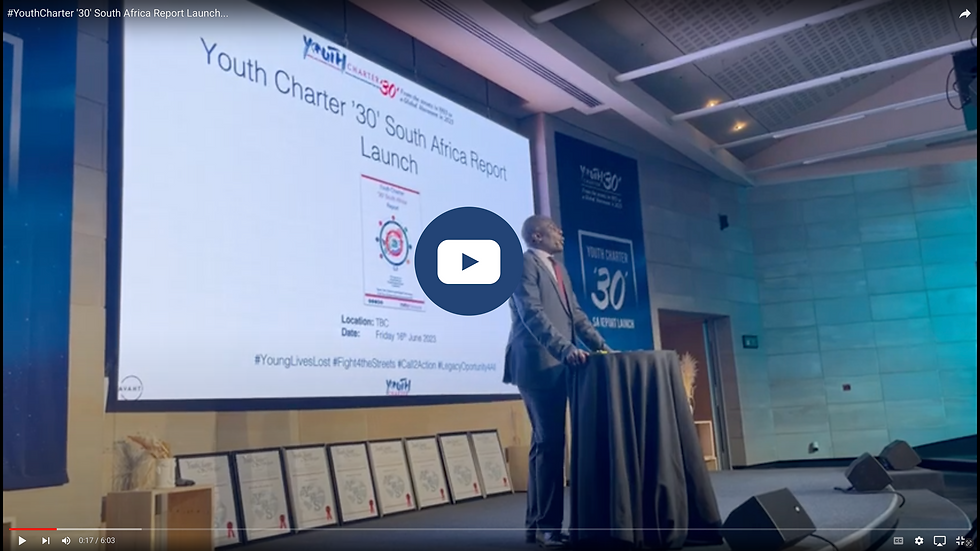
As we stand at a critical juncture, facing youth unemployment, violence, inequality, and climate crisis, Mandela’s legacy demands not remembrance but responsibility. The Youth Charter’s Global Call to Action, especially through its YC ‘30’ South Africa Report, echoes his voice and challenges the world to turn symbolism into structural change.
A Legacy Planted in Hope
At the Queen Elizabeth Olympic Park, trees planted in Mandela’s honour grow as symbols of his enduring spirit. They remind us that from the seeds of struggle can grow communities of peace. They remind us that youth are not problems to be managed, but leaders to be empowered. They remind us that:
"Vision without action is merely a dream,
Action without vision just passes the time,
ision with action can change the world”.
Today, and every day, we honour Nelson Mandela not only with words, but with continued commitment to justice, to youth, to peace.
Please see the South Africa Community Campus Case Study.


Comments